Patios, garden walls and driveways
Elevate your outdoor areas with our premium hardscaping services, creating stunning and practical spaces to enjoy year-round.
About our hardscaping
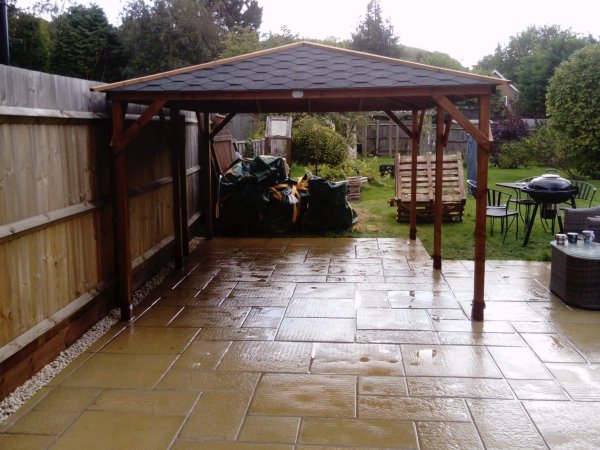
Patios, paving, driveways, retaining walls and garden features built to handle British weather and look great doing it. Proper sub-base, proper drainage, proper finish.
- Patios and paving
- Block-paved driveways
- Retaining walls and steps
- Garden features and edging
- Drainage and ground prep
Built from the ground up
Most paving problems start underneath. For patios, block-paved driveways and paths we dig out to firm ground, lay and compact a proper sub-base, and plan the falls and drainage before a single slab or block goes down, so water runs away from the house instead of pooling. Edging is set in concrete so the surface doesn't creep over the years.
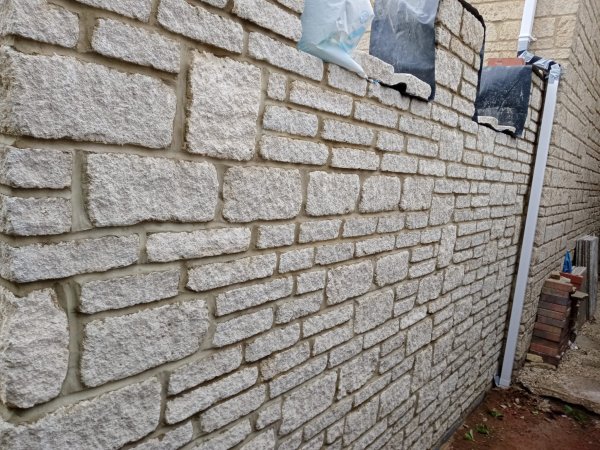
Retaining walls and garden steps are built as structural brickwork — with footings, drainage behind the wall and the right thickness for the load of soil they hold back. We also build garden walls, raised beds and edging, and match brick to the house where it matters. Hardscaping is often small enough to be completed in days rather than weeks.
How the job runs
Every job starts with a free, no-obligation site visit from our Bidwell, Dunstable base. We look at the property, talk through what you want, and follow up with an estimate.
We work from your architect's drawings. On site we keep things clean and tidy — it's how we were taught from day one — and we liaise with the other trades the job needs. We hold full public liability insurance, with documents available on request.
Guides: patios · block-paved driveways · block paving maintenance · driveway drainage · retaining wall types · garden walls · Retaining wall types compared · What affects the cost of a garden wall · Block paving maintenance: re-sanding, sealing and weeds · What affects the cost of a block paving driveway? · Garden room prices: what decides the cost · Patio cost: what decides the price · Garden landscaping cost: the factors that matter · Fencing cost: what affects the price. See the work: gallery · case studies · cost calculator.
Patios, garden walls and driveways as one job
Most outside projects touch more than one of these. A new patio often needs a low wall or step where the garden changes level, and a driveway usually needs edging, a dwarf wall or a soakaway alongside it. Building them together means the levels, falls and drainage are planned once, and the brick or paving ties in across the whole space instead of looking like three separate jobs.
Garden walls can be free-standing boundary walls, raised beds or retaining walls holding back soil. Each needs footings sized for its height and load, and retaining walls also need drainage behind them so water pressure does not push them over. Driveways can be block paving or slabs, laid on a deeper sub-base than a patio because they carry the weight of a car.
Choosing paving slabs
Paving slabs range from budget concrete through to porcelain and natural stone such as sandstone and limestone. The cheapest paving slabs can look fine on day one, but thin or porous slabs crack under point loads and stain more easily, so it is worth matching the slab to how the space will be used. Porcelain is dense and easy to clean but needs a specialist bed and careful cutting; natural stone varies in thickness and colour, which suits a softer, traditional look.
Whatever slab you choose, the result depends on the ground under it. A patio laid on soil or a thin layer of sand will move. We dig to firm ground, compact a proper sub-base and set falls away from the house so rain drains off.
Patio, wall and driveway questions
- Do I need planning permission for a driveway?
- In England, a new or replacement front driveway over 5 square metres needs planning permission unless it uses permeable paving or drains to a lawn or border within the property. A dropped kerb onto the road also needs council approval.
- How high can a garden wall be without planning permission?
- As a general rule, a wall up to 1 metre high next to a road, or up to 2 metres elsewhere, does not need planning permission. Listed buildings, conservation areas and planning conditions on your property can change this.
- What is the difference between a patio and a driveway build?
- A driveway needs a deeper, stronger sub-base and edging to take the weight of vehicles, plus drainage that meets the planning rules. A patio carries foot traffic, so the sub-base is shallower, but it still needs falls away from the house.
- Can you build steps and walls with a new patio?
- Yes. Retaining walls, garden steps, raised beds and edging are part of our hardscaping work and are often built alongside a patio so the levels work together.
Related: patios · garden walls · retaining walls · block paving cost factors · driveway drainage · garden steps · resin driveways · gravel driveways · drainage and soakaways.